This month’s edition provides a focused review of newly approved and recently launched therapies. Expion Health monitors these developments closely to assess clinical relevance, therapeutic positioning, and potential implications for payers, providers, and patients.
WAYRILZ
Indication
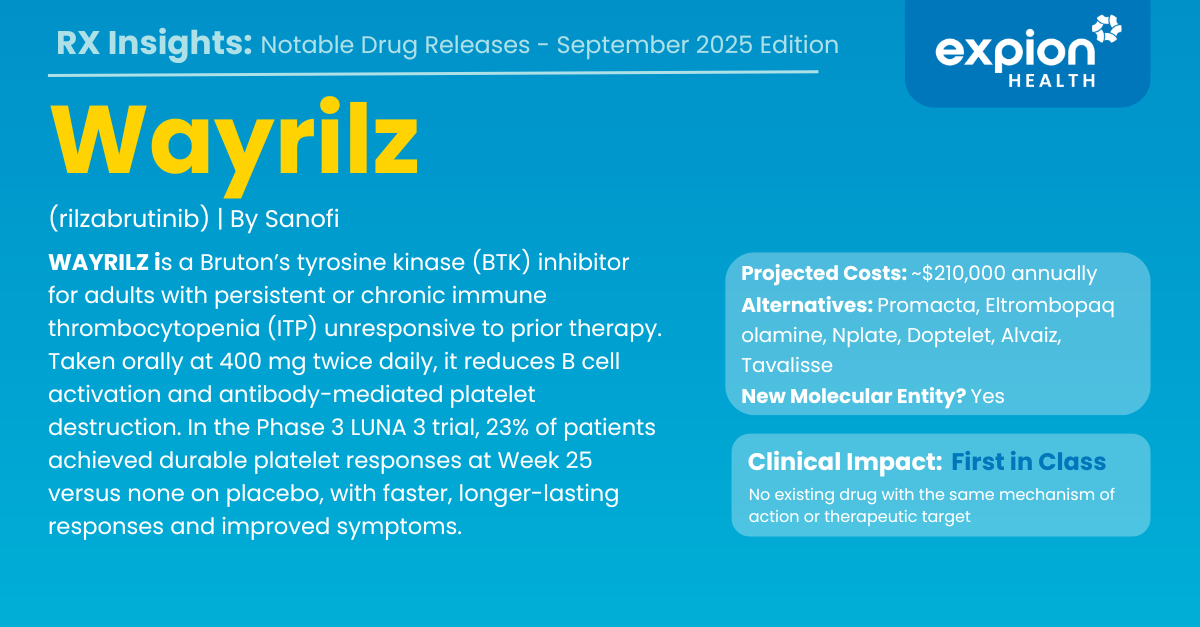
WAYRILZ (rilzabrutinib) is a kinase inhibitor approved by the FDA on August 29, 2025, for the treatment of adults with persistent or chronic immune thrombocytopenia (ITP) who have had an insufficient response to a previous therapy.
Dosage and Administration
The recommended dose is 400 mg orally twice daily with water, and with or without food.
Warnings and Precautions
Key safety considerations include serious infections, hepatotoxicity, and embryo-fetal toxicity. The most common adverse reactions (10% or more) are diarrhea, nausea, headache, abdominal pain, and COVID-19.
Mechanism of Action
WAYRILZ is a covalent, reversible small-molecule inhibitor of Bruton’s tyrosine kinase (BTK). It mediates its therapeutic effect in ITP by inhibiting B-cell activation and disrupting antibody-coated cell phagocytosis by Fc receptors in the spleen and liver. In vitro studies showed reduced autoantibody signaling and blocked B-cell activation.
Disease Background
Immune thrombocytopenia (ITP) is a rare autoimmune bleeding disorder defined by abnormally low platelet counts (less than 150,000). It is a diagnosis of exclusion, reached after other causes of thrombocytopenia are ruled out. Disease management and treatment choice are influenced by platelet count, bleeding history and severity, as well as age and lifestyle factors.
Clinical Data
Approval was based on results from the Phase 3 LUNA-3 trial in 202 adults with ITP. In the Phase 3 LUNA-3 study, 23% of patients treated with WAYRILZ achieved durable platelet responses at Week 25, compared with 0% on placebo (p<0.0001). Patients receiving WAYRILZ also experienced a faster time to first platelet response, longer duration of response, and greater improvements in ITP-related symptoms.
Bildyos
Indication
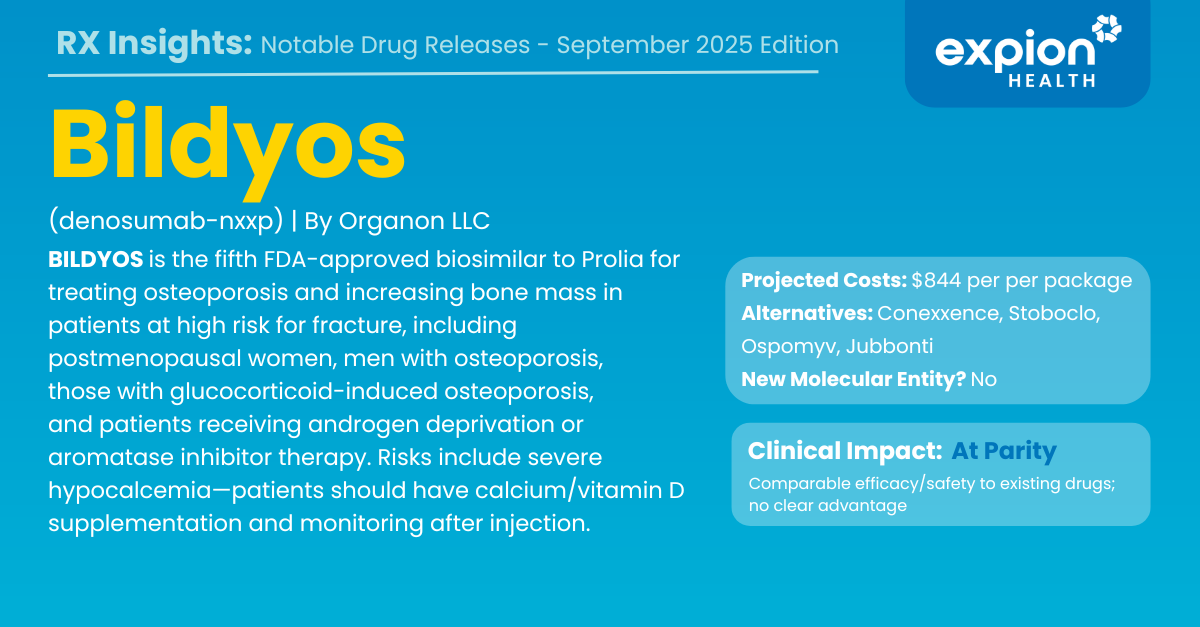
BILDYOS (denosumab-nxxp), the fifth FDA-approved biosimilar to Prolia, was approved on September 2, 2025. It is indicated for the treatment of:
- postmenopausal women with osteoporosis at high risk for fracture
- to increase bone mass in men with osteoporosis at high risk for fracture
- glucocorticoid-induced osteoporosis in men and women at high risk for fracture
- to increase bone mass in men at high risk for fracture receiving androgen deprivation therapy for nonmetastatic prostate cancer
- to increase bone mass in women at high risk for fracture receiving adjuvant aromatase inhibitor therapy for breast cancer.
BILDYOS is not interchangeable with Prolia at this time.
Dosage and Administration
The recommended dose is 60 mg administered via a healthcare provider as a single subcutaneous injection once every 6 months. Patients should be adequately supplemented with 1000 mg of calcium and 400 IU of vitamin D daily.
Warnings and Precautions
Severe hypocalcemia, including fatal cases, has been reported with denosumab products such as BILDYOS. Correct pre-existing hypocalcemia before initiating therapy. In patients predisposed to hypocalcemia or disturbances of mineral metabolism, serum calcium, phosphorus, and magnesium should be monitored 10–14 days after injection.
Mechanism of Action
BILDYOS is a monoclonal antibody that binds to RANKL, a protein essential for the formation, function, and survival of osteoclasts. By preventing the RANKL/RANK interaction, BILDYOS inhibits osteoclast activity, thereby decreasing bone resorption and increasing bone mass and strength in both cortical and trabecular bone.
Disease Background
Osteoporosis is the most common bone disease, marked by low bone mass and increased fracture risk. In the U.S., 12.6% of adults over 50 are affected, with higher prevalence in women (19.6%) compared to men (4.4%). Fractures from osteoporosis significantly increase morbidity and mortality, and risk rises further in patients with prior fractures. The prevalence of osteoporotic fractures is expected to increase as the population ages.
Clinical Data
BILDYOS did not undergo separate efficacy trials for approval. Instead, FDA approval was supported by a comprehensive analytical and clinical data package, including structural and functional analyses, pharmacokinetic data, and comparative clinical studies confirming biosimilarity to Prolia.
Bilprevda
Indication
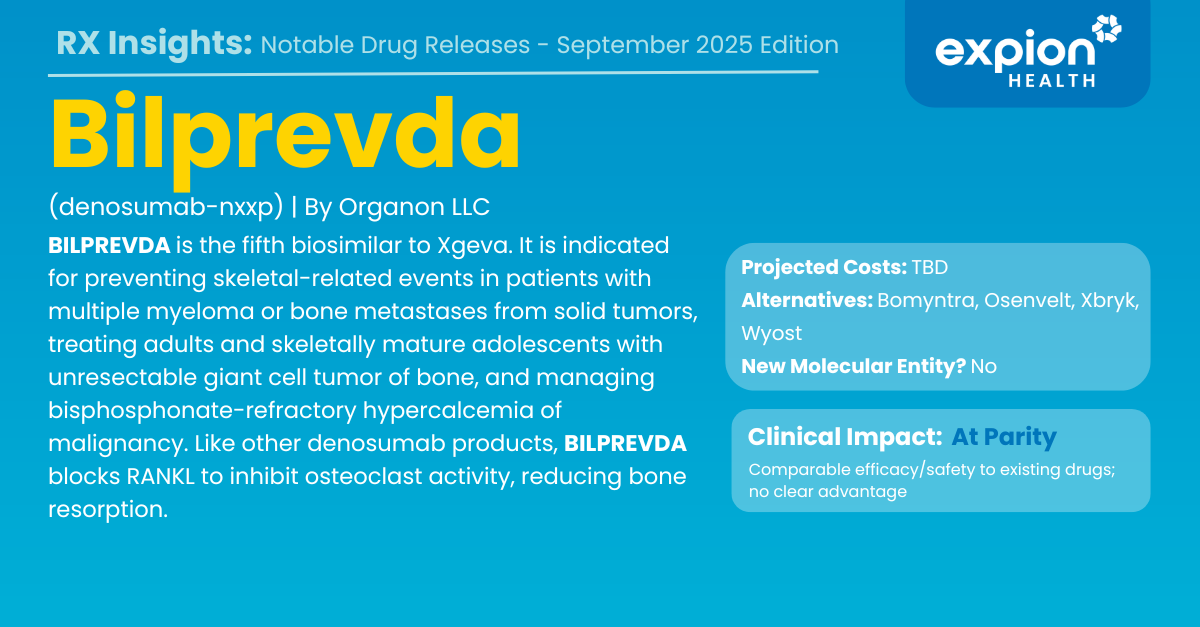
BILPREVDA (denosumab-nxxp), the fifth FDA-approved biosimilar to Xgeva, was approved on September 2, 2025. It is indicated for:
- Prevention of skeletal-related events in patients with multiple myeloma or bone metastases from solid tumors
- Treatment of adults and skeletally mature adolescents with unresectable giant cell tumor of bone or when surgical resection would likely cause severe morbidity
- Treatment of hypercalcemia of malignancy refractory to bisphosphonate therapy
BILPREVDA is not interchangeable with Prolia at this time
Dosage and Administration
– Multiple Myeloma and Bone Metastases: A healthcare provider is to inject 120 mg subcutaneously every 4 weeks in the upper arm, upper thigh, or abdomen.
– Giant Cell Tumor of Bone and Hypercalcemia of Malignancy: A healthcare provider is to inject 120 mg every 4 weeks with additional 120 mg doses on Days 8 and 15 of the first month of therapy.
All patients should be adequately supplemented with calcium and vitamin D.
Warnings and Precautions
Denosumab products, including BILPREVDA, can cause severe symptomatic hypocalcemia, with fatal cases reported. Correct hypocalcemia prior to initiation, monitor calcium levels during therapy (especially in the first weeks), and ensure supplementation with calcium and vitamin D.
Mechanism of Action
BILPREVDA is a monoclonal antibody that binds to RANKL, a protein essential for the formation and survival of osteoclasts. By blocking the RANKL/RANK interaction, BILPREVDA decreases osteoclast activity, reducing bone resorption and calcium release from bone. This mechanism addresses bone pathology in solid tumors with osseous metastases and giant cell tumors of bone, where RANKL-driven signaling promotes osteolysis and tumor growth.
Disease Background
Osteoporosis is the most common bone disease, marked by low bone mass and increased fracture risk. In the U.S., 12.6% of adults over 50 are affected, with prevalence higher in women (19.6%) than men (4.4%). Osteoporotic fractures significantly raise morbidity and mortality risk, and prevalence is expected to increase as the population ages.
Leqembi Iqlik
Indication
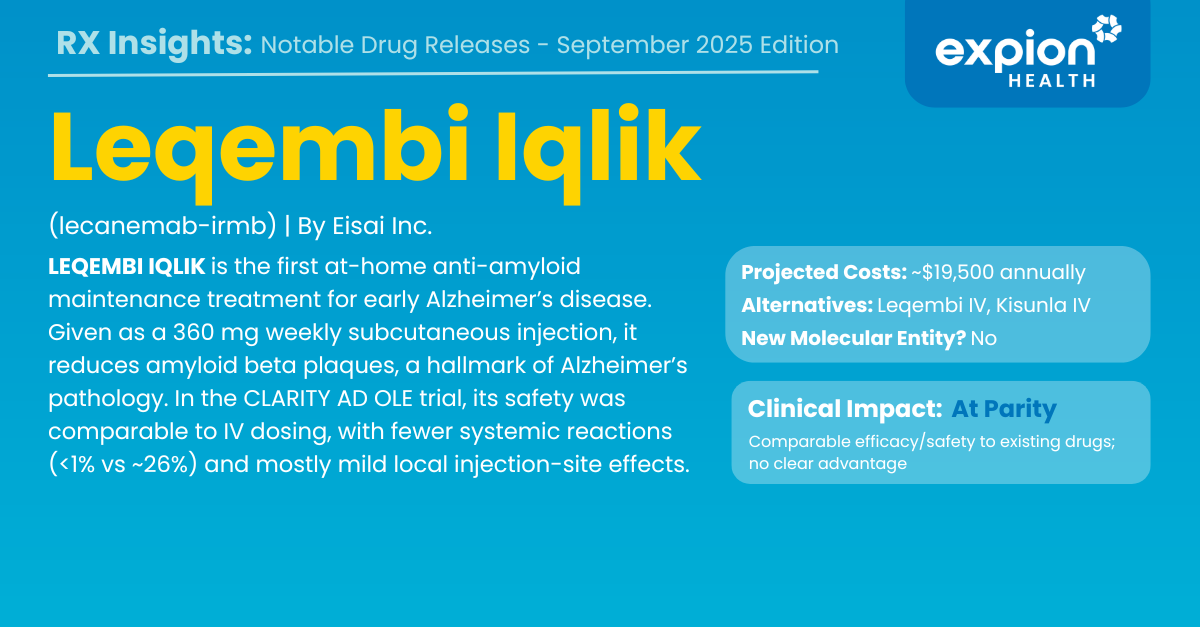
LEQEMBI IQLIK (lecanemab-irmb) is the first and only FDA-approved at-home amyloid beta-directed antibody maintenance treatment for early Alzheimer’s disease. It was approved on August 29, 2025, based on data from the CLARITY AD OLE trial.
Dosage and Administration
The recommended dose is 360 mg administered subcutaneously in the abdomen, upper thigh, and back of the upper arm once weekly via autoinjector. Keep refrigerated until use and allow it to be at room temp 20 minutes before use.
Warnings and Precautions
Key safety concerns include amyloid-related imaging abnormalities (ARIA) and injection-site reactions. The most common adverse reactions are infusion-related events, ARIA-microhemorrhages, ARIA-edema/effusion, and headache.
Mechanism of Action
LEQEMBI IQLIK is a humanized IgG1 monoclonal antibody that targets aggregated soluble and insoluble forms of amyloid beta. By reducing amyloid beta plaques, it addresses one of the defining pathological features of Alzheimer’s disease.
Disease Background
Alzheimer’s disease is the most common cause of dementia, responsible for 60–80% of cases. It is a progressive, irreversible neurodegenerative condition characterized by amyloid beta plaques, tau-related neurofibrillary tangles, and associated cognitive, functional, and behavioral decline. In 2025, an estimated 7.2 million Americans aged 65 and older are living with Alzheimer’s dementia.
Clinical Data
In the CLARITY AD OLE trial, over 600 patients received subcutaneous LEQEMBI IQLIK across dose levels. Among 49 patients treated with the 360 mg weekly maintenance dose after at least 18 months of IV therapy, no systemic or local injection-related adverse events occurred. Overall, systemic reactions were less common with subcutaneous dosing (<1%) compared to IV infusions (~26%). Mild-to-moderate local reactions (redness, swelling, itching) occurred in ~11% of patients but did not interrupt treatment. ARIA rates were comparable between subcutaneous and IV dosing, and consistent with background rates observed in untreated patients.
Inlexzo
Indication
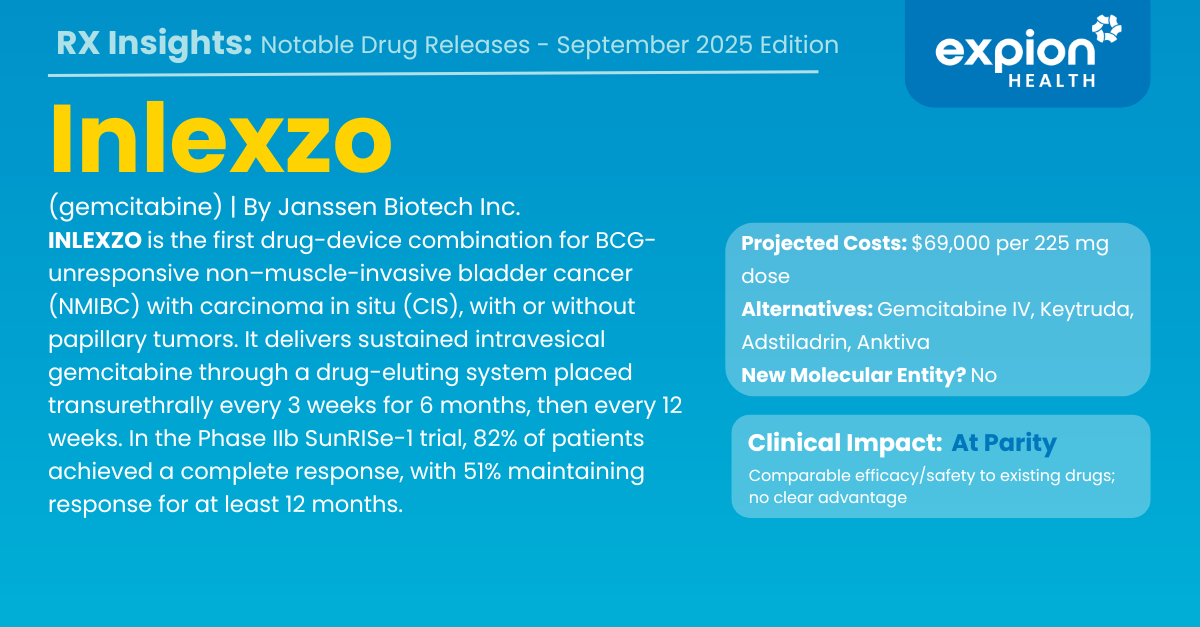
INLEXZO (gemcitabine intravesical system) is the first FDA-approved drug-device combination providing sustained intravesical chemotherapy via a drug-eluting system for adults with Bacillus Calmette-Guérin (BCG)-unresponsive non–muscle-invasive bladder cancer (NMIBC) with carcinoma in situ (CIS), with or without papillary tumors. Approved on September 9, 2025, INLEXZO offers an outpatient, bladder-sparing option for patients who decline or are ineligible for cystectomy.
Dosage and Administration
The recommended regimen is 225 mg of gemcitabine delivered intravesically every 3 weeks for 6 months, followed by once every 12 weeks for up to 18 months. INLEXZO is supplied as a bi-oval-shaped intravesical system containing a gemcitabine core and osmotic components, inserted into the bladder transurethrally with a co-packaged sterile catheter and stylet.
Warnings and Precautions
Risks include use in patients with perforated bladder, risk of metastatic disease with delayed cystectomy, MRI safety considerations, and embryo-fetal toxicity. The most common adverse reactions are pollakiuria, dysuria, urinary tract infection, hematuria, and urinary tract pain.
Mechanism of Action
INLEXZO is a nucleoside metabolic inhibitor-containing intravesical system that provides continuous local delivery of gemcitabine, prolonging bladder exposure and enhancing therapeutic effect while minimizing systemic toxicity.
Disease Background
Bladder cancer is the sixth most common cancer in the U.S., with ~85,000 new diagnoses annually. Urothelial carcinoma accounts for 90% of cases and is the most frequent malignancy of the urinary tract. While cisplatin-based chemotherapy remains the standard for advanced disease, ~20% of recurrent and refractory cases harbor FGFR (Fibroblast Growth Factor) alterations.
Clinical Data
FDA approval was based on Cohort 2 of the Phase IIb SunRISe-1 trial (NCT04640623), a single-arm, multicenter study of 85 patients with BCG-unresponsive CIS with or without papillary disease. INLEXZO achieved a complete response in 82% of patients, with 51% maintaining complete response for at least 12 months.
Enbumyst
Indication
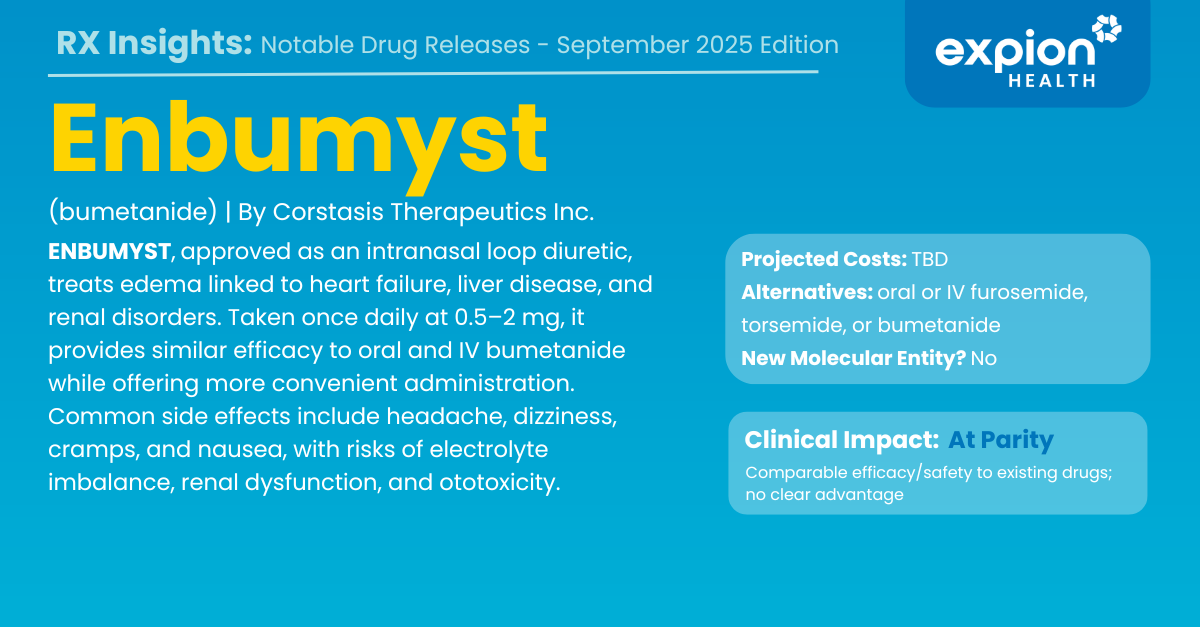
ENBUMYST (bumetanide nasal spray) is a loop diuretic approved for the treatment of edema associated with congestive heart failure, hepatic disease, and renal disease (including nephrotic syndrome) in adults.
Dosage and Administration
The recommended total daily dose is 0.5 mg to 2 mg administered intranasally once daily.
Warnings and Precautions
ENBUMYST may cause fluid, electrolyte, and metabolic abnormalities, worsening renal function, and ototoxicity. The most common adverse reactions are hypovolemia, headache, muscle cramps, dizziness, hypotension, nausea, and encephalopathy in patients with pre-existing liver disease.
Mechanism of Action
ENBUMYST (bumetanide) inhibits sodium and chloride reabsorption in the proximal and distal tubules and in the loop of Henle. Its potent diuretic effect is due to this unique site of action, independent of carbonic anhydrase or aldosterone inhibition.
Disease Background
Edema and fluid overload are major drivers of hospitalization and readmission for patients with congestive heart failure, cirrhosis, and chronic kidney disease. In the U.S., 6.7 million adults live with heart failure, contributing to over 1 million hospitalizations annually and billions in healthcare costs. Oral loop diuretics may be limited by poor absorption and delayed onset, while intravenous therapy requires inpatient resources and is associated with higher healthcare expenditures.
Clinical Data
FDA approval of ENBUMYST was supported by a clinical trial comparing intranasal, oral, and intravenous bumetanide in 68 healthy adults. The 2 mg intranasal dose demonstrated diuresis, natriuresis, and potassium excretion effects comparable to both oral and IV formulations over 0–8 hours and 0–24 hours.
Forzinity
Indication
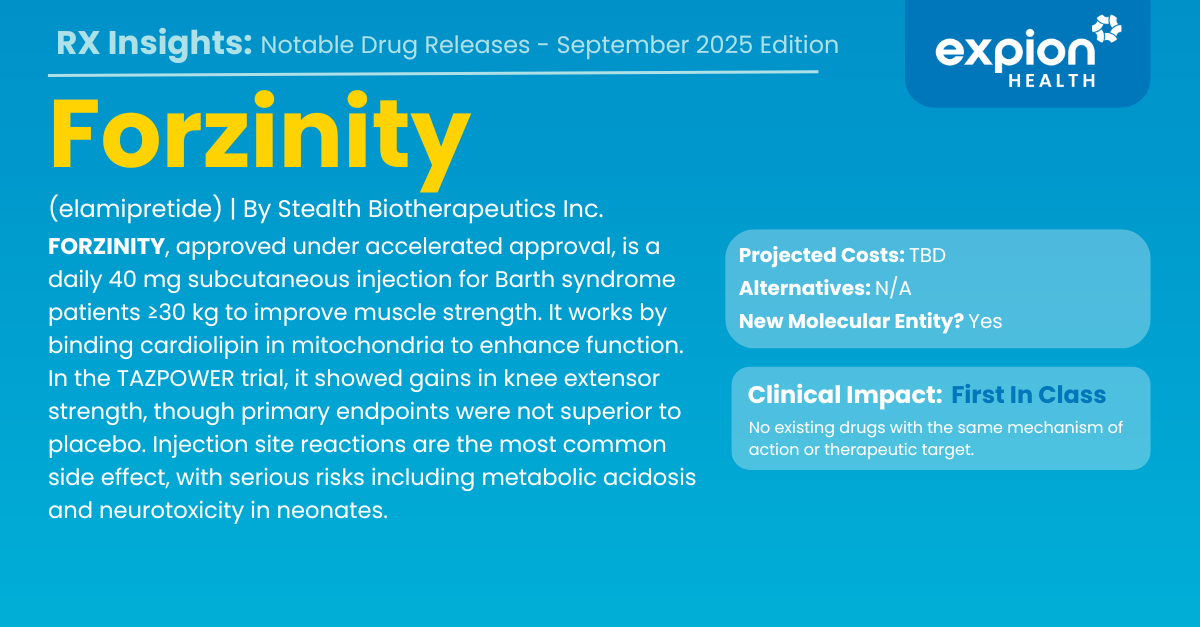
FORZINITY (elamipretide) is a mitochondrial cardiolipin binder approved under accelerated approval to improve muscle strength in adult and pediatric patients with Barth syndrome weighing at least 30 kg. Approval is based on improvement in knee extensor muscle strength, an intermediate clinical endpoint. Continued approval may be contingent on verification of clinical benefit in confirmatory trials.
Dosage and Administration
The recommended dose for patients ≥30 kg is 40 mg administered subcutaneously once daily.
Warnings and Precautions
The most common adverse reactions are mild-to-moderate injection-site reactions. Serious reactions, including fatal events, metabolic acidosis progressing to neurotoxicity, and gasping syndrome, have been reported in low-birth-weight and preterm neonates who received benzyl alcohol-containing drugs intravenously. FORZINITY is not approved for use in neonates.
Mechanism of Action
FORZINITY localizes to the inner mitochondrial membrane where it binds cardiolipin, improving mitochondrial morphology and function.
Disease Background
Barth syndrome is a rare X-linked metabolic disorder that primarily affects males and impacts the heart, skeletal muscle, immune system, and growth. Onset usually occurs in infancy or early childhood, though severity varies. Patients often develop cardiomyopathy, serious arrhythmias, heart failure, infections, or sepsis. The disorder affects ~1 in every 300,000 to 400,000 live births worldwide.
Clinical Data
The FDA’s decision was supported by the TAZPOWER trial. In the randomized portion, 12 patients ≥12 years and >30 kg with genetically confirmed Barth syndrome received FORZINITY 40 mg once daily or placebo for 12 weeks. While FORZINITY was not superior to placebo on primary endpoints (6-minute walk test and Total Fatigue Score), knee extensor muscle strength improved from baseline during the open-label phase. Ten patients entered the long-term extension study, with 8 completing through Week 168, supporting safety and tolerability.
INLURIYO
Indication
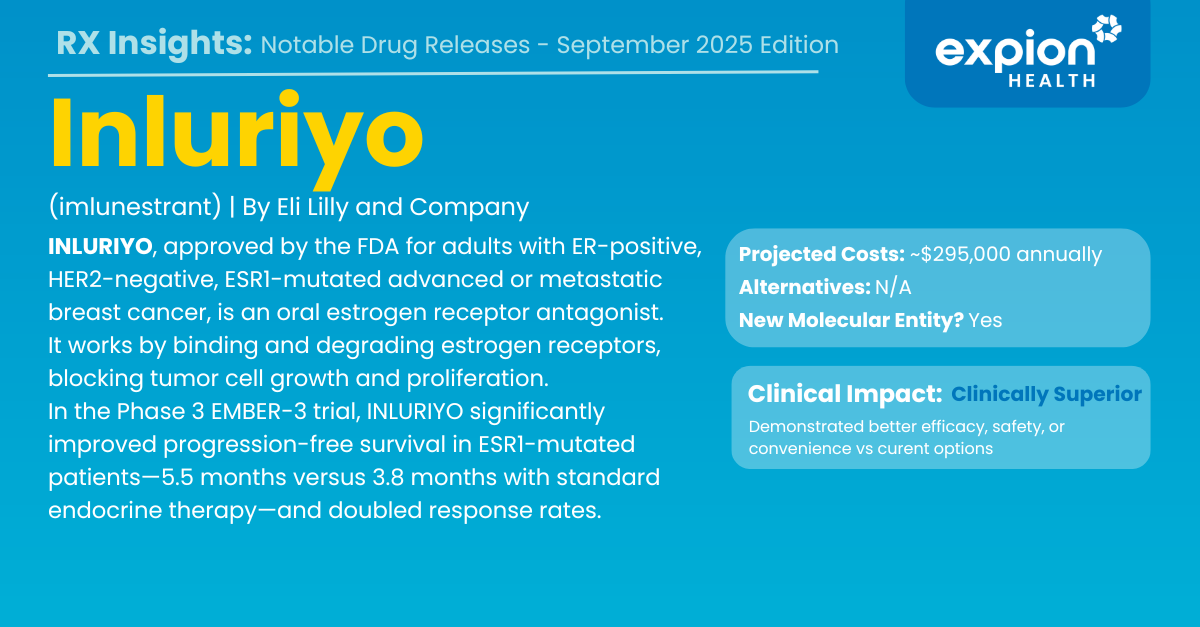
INLURIYO (imlunestrant) is an estrogen receptor antagonist approved by the FDA for the treatment of adults with estrogen receptor–positive (ER+), human epidermal growth factor receptor 2–negative (HER2–), ESR1-mutated advanced or metastatic breast cancer that has progressed following at least one line of endocrine therapy.
Dosage and Administration
The recommended dose is 400 mg orally once daily on an empty stomach, either at least 2 hours before food or 1 hour after food, until disease progression or unacceptable toxicity.
Warnings and Precautions
INLURIYO may cause fetal harm. Patients should be advised of the potential risk to a fetus and counseled to use effective contraception during treatment.
Mechanism of Action
Imlunestrant binds to estrogen receptor alpha (ERα), promoting receptor degradation and inhibiting ER-dependent gene transcription and cellular proliferation in ER+ breast cancer cells. The drug has demonstrated anti-tumor activity in both in vitro and in vivo models, including those with ESR1 mutations.
Disease Background
Metastatic breast cancer (MBC) is a form of breast cancer that spreads beyond the breast to distant organs. Approximately 30% of high-risk early-stage cases progress to metastatic disease, and 6–10% of new breast cancer cases are metastatic at diagnosis. Prognosis declines with stage—five-year relative survival rates are 99% for localized disease, 86% for regional disease, and 30% for metastatic disease.
Clinical Data
FDA approval was supported by the Phase 3 EMBER-3 trial (NCT04975308), a randomized, open-label, active-controlled study of 874 patients with ER+, HER2– locally advanced or metastatic breast cancer previously treated with an aromatase inhibitor, with or without a CDK4/6 inhibitor. In the ESR1-mutated subgroup (n=256), INLURIYO demonstrated a statistically significant improvement in progression-free survival (PFS) compared to standard endocrine therapy. Median PFS was 5.5 months (95% CI: 3.9–7.4) with INLURIYO versus 3.8 months (95% CI: 3.7–5.5) with investigator’s choice (HR 0.62; 95% CI: 0.46–0.82; p=0.0008). The objective response rate (ORR) was 14.3% versus 7.7%, respectively. Overall survival data were immature at the time of analysis.
PALSONIFY
Indication
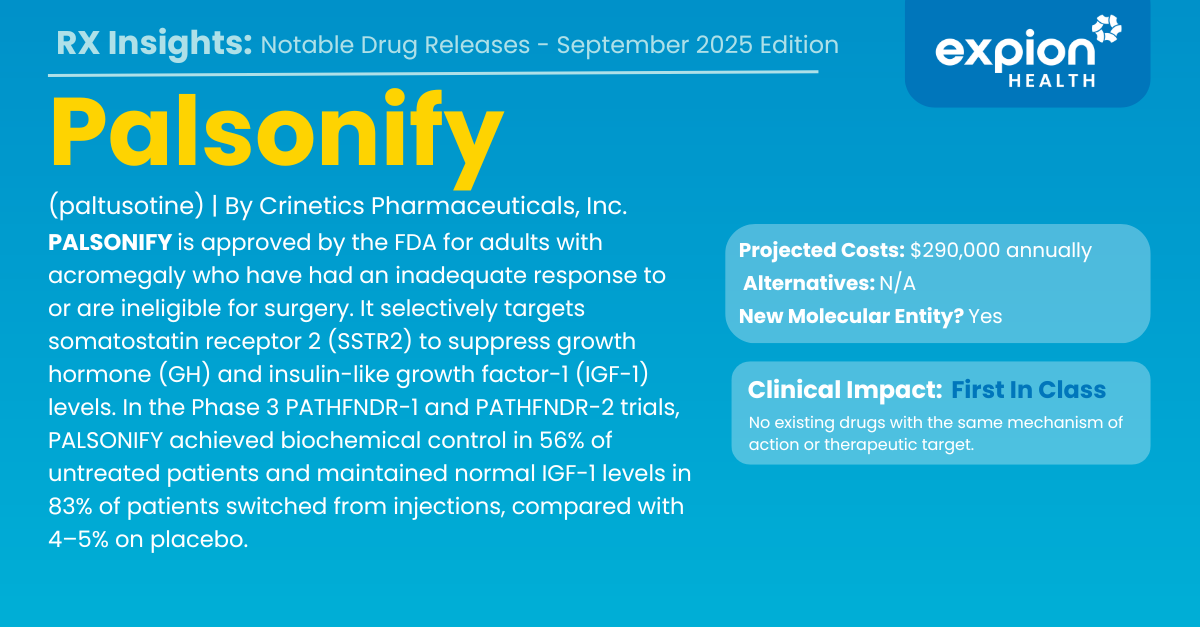
PALSONIFY (paltusotine) is a somatostatin receptor agonist approved by the FDA for the first-line treatment of adults with acromegaly who have had an inadequate response to surgery and/or for whom surgery is not an option.
Dosage and Administration
The recommended dose is 40 mg taken orally once daily with water on an empty stomach, at least 6 hours after a meal and at least 1 hour before the next meal. After 2 to 4 weeks of taking 40 mg once daily, patients may be instructed to increase to 60 mg daily based on their IGF-1 levels.
Warnings and Precautions
If complications of cholelithiasis occur, discontinue PALSONIFY and treat appropriately. Hyperglycemia and hypoglycemia may occur; monitor glucose and adjust antidiabetic treatment as needed. Bradycardia or conduction abnormalities may occur, and dosage adjustments of concomitant medications with bradycardic effects may be necessary. Hypothyroidism, steatorrhea, malabsorption of dietary fats, and vitamin B12 deficiency have also been reported. Periodic monitoring of thyroid function, vitamin B12, and gastrointestinal symptoms is recommended.
Mechanism of Action
Paltusotine suppresses growth hormone (GH) and insulin-like growth factor-1 (IGF-1) secretion through selective agonism (>4,000-fold) of somatostatin receptor 2 (SSTR2) with minimal affinity for other receptor subtypes. It inhibits cyclic adenosine monophosphate (cAMP) accumulation via SSTR2 activation, resulting in GH and IGF-1 suppression similar to the natural hormone somatostatin.
Disease Background
Acromegaly is a rare endocrine disorder caused by excessive growth hormone production, usually due to a benign pituitary tumor. Elevated GH levels stimulate increased production of IGF-1, leading to abnormal tissue and bone growth. Patients often experience enlarged hands and feet, coarsened facial features, headaches, and metabolic complications such as diabetes, hypertension, arthritis, and heart failure.
Clinical Data
FDA approval was supported by data from the PATHFNDR-1 and PATHFNDR-2 Phase 3 pivotal trials, which evaluated PALSONIFY’s safety and efficacy in both previously treated and untreated adults with acromegaly. In the 24-week PATHFNDR-1 study (n=111), 56% of patients achieved normalized IGF-1 levels compared with 5% taking placebo, with most achieving normalization within 2 to 4 weeks. In the 36-week PATHFNDR-2 study (n=58) of patients switching from injections, 83% maintained IGF-1 control versus 4% with placebo (p<0.0001). Across both studies, PALSONIFY demonstrated rapid onset, reliable biochemical control, and sustained efficacy.
- https://products.sanofi.us/wayrilz/wayrilz.pdf
- https://www.organon.com/product/usa/pi_circulars/b/bildyos/bildyos_pi.pdf/
- https://www.organon.com/product/usa/pi_circulars/b/bilprevda/bilprevda_pi.pdf/
- https://www.leqembi.com/-/media/Files/Leqembi/Prescribing-Information.pdf?hash=a88be7f8-601d-4c21-847d-790c0186ef18
- https://www.janssenlabels.com/package-insert/product-monograph/prescribing-information/INLEXZO-pi.pdf
- https://www.enbumyst.com/assets/docs/Enbumyst_bumetanide_nasal_spray_PI_12Sept25.7c6c1f49.pdf
- https://www.accessdata.fda.gov/drugsatfda_docs/label/2025/215244s000lbl.pdf
- https://pi.lilly.com/us/inluriyo-uspi.pdf
- https://www.accessdata.fda.gov/drugsatfda_docs/label/2025/219070s000lbl.pdf