This month’s edition provides a focused review of newly approved and recently launched therapies. Expion Health monitors these developments closely to assess clinical relevance, therapeutic positioning, and potential implications for payers, providers, and patients.
Indication
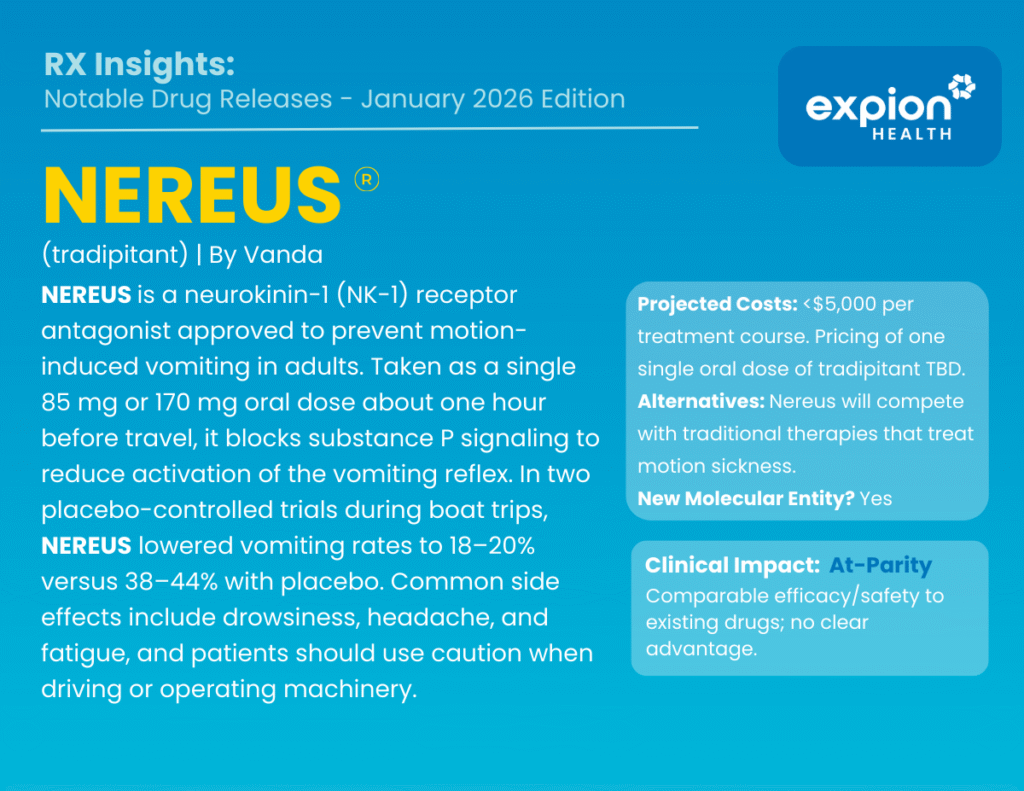
NEREUS (tradipitant) is a substance P/neurokinin-1 (NK-1) receptor antagonist indicated for the prevention of motion-induced vomiting in adults.
Dosage and Administration
NEREUS is available as 85 mg oral capsules. The recommended dose is 85 mg or 170 mg taken as a single oral dose approximately 1 hour before exposure to an activity expected to cause motion sickness (e.g., travel by boat, car, or air).
Warnings and Precautions
Common adverse reactions include somnolence, headache, and fatigue. NEREUS may impair mental and/or physical abilities, and patients should use caution when driving or operating heavy machinery after dosing.
Mechanism of Action
NEREUS selectively blocks neurokinin-1 (NK-1) receptors, preventing substance P–mediated signaling in the central nervous system. By inhibiting this pathway, the drug reduces activation of the vomiting reflex associated with motion stimuli.
Disease Background
Motion sickness occurs when sensory signals from the eyes, inner ear, and body conflict, disrupting the brain’s perception of movement. This mismatch can trigger nausea, vomiting, cold sweats, dizziness, and headache. Preventive treatment is often preferred, particularly for predictable exposures such as travel.
Clinical Data
Approval was supported by two randomized, double-blind, placebo-controlled trials (NEREUS Studies 1 and 2) evaluating adults during 2–5-hour boat trips.
- Vomiting occurred in 18–20% of patients receiving NEREUS vs 38–44% with placebo
- Absolute risk reduction: approximately 19–27%
Results demonstrate that pre-trip dosing significantly reduces motion-induced vomiting. Efficacy for treatment of established nausea or vomiting has not been evaluated.
Indication
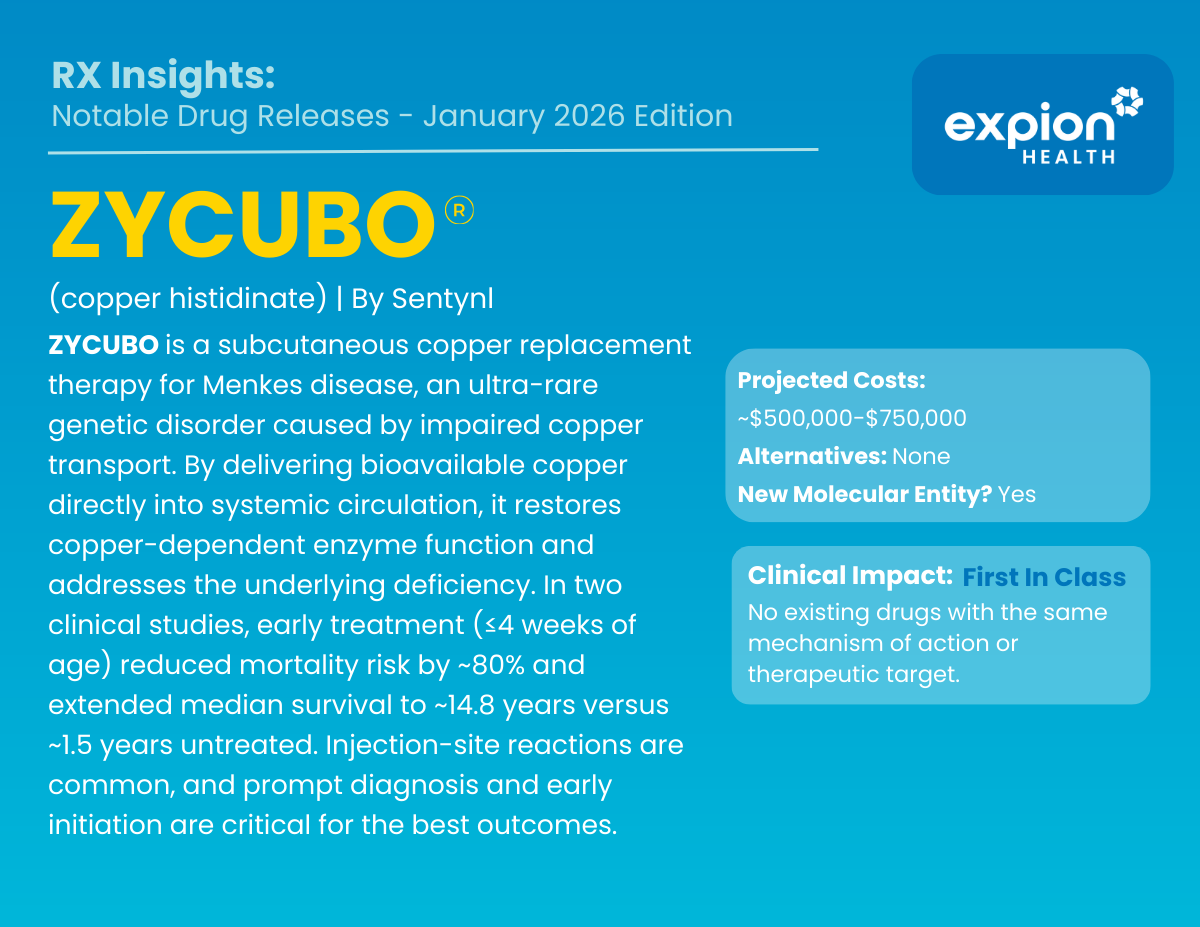
ZYCUBO (copper histidinate) is a copper replacement therapy approved for the treatment of Menkes disease, a rare, X-linked recessive neurodegenerative disorder caused by mutations in the ATP7A gene that impair copper transport and absorption.
Dosage and Administration
ZYCUBO is administered as a subcutaneous injection. Treatment is intended to deliver bioavailable copper directly into systemic circulation, bypassing defective intestinal copper absorption. The recommended dosage of ZYCUBO in pediatric patients:
- Less than 1 year of age is 1.45 mg administered subcutaneously twice daily (8-12 hours between injections).
- 1 year of age to less than 17 years of age is 1.45 mg administered subcutaneously once daily
Warnings and Precautions
The most common adverse reactions are pneumonia, viral infections, respiratory failure, seizure, bacterial infection, hemorrhage, hypotension, vomiting, tachycardia, pyrexia, volume depletion, fracture, dyspnea, transaminases elevation, diarrhea, fungal infection, anemia, and local administration reaction.
Mechanism of Action
ZYCUBO provides systemic copper replacement by delivering copper histidinate directly into circulation, restoring copper availability to copper-dependent enzymes and tissues. This approach helps address the underlying metabolic deficiency caused by impaired copper transport.
Disease Background
Menkes disease is an ultra-rare genetic disorder characterized by systemic copper deficiency that leads to progressive neurologic deterioration, connective tissue abnormalities, seizures, failure to thrive, and high early-childhood mortality if untreated. Prior to copper replacement therapy, outcomes were typically poor, with limited treatment options available.
Clinical Data
Efficacy was evaluated in two open-label clinical studies using external untreated controls. Early initiation (≤4 weeks of age) was associated with substantial survival benefit:
- 78–80% reduction in mortality risk vs untreated children
- Median overall survival: ~14.8 years with early treatment vs ~1.5 years untreated
These results support ZYCUBO as a disease-modifying therapy that significantly improves survival when started early.