This month’s edition provides a focused review of newly approved and recently launched therapies. Expion Health monitors these developments closely to assess clinical relevance, therapeutic positioning, and potential implications for payers, providers, and patients.
Indication
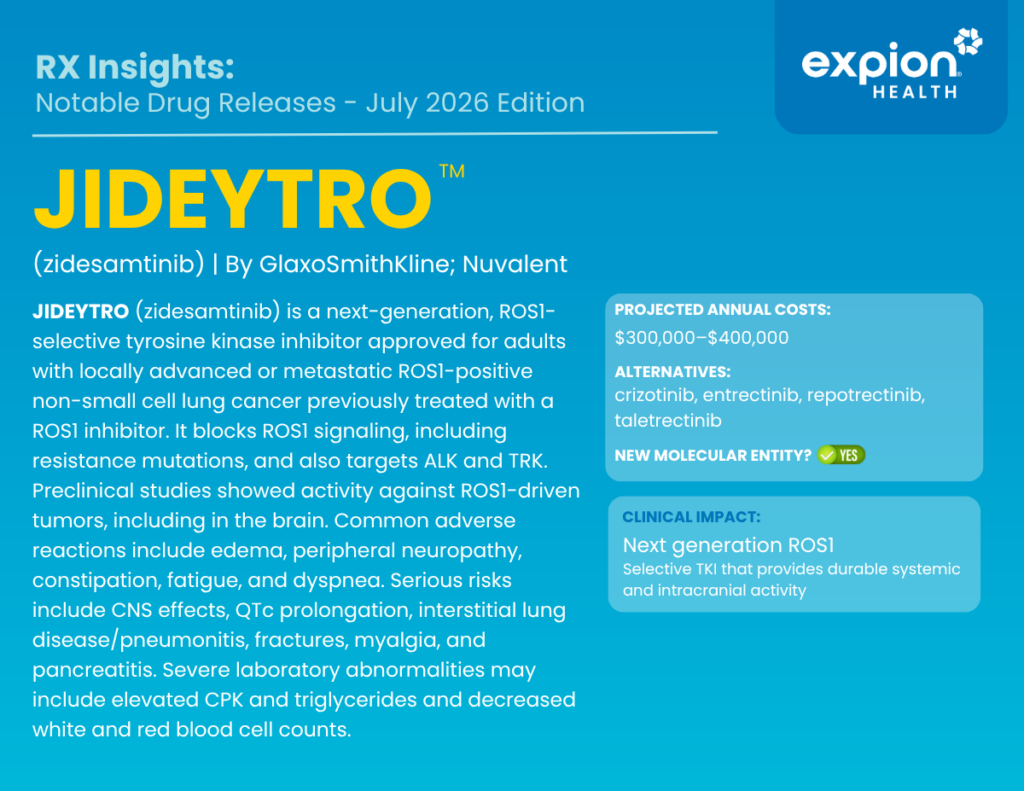
JIDEYTRO is indicated for the treatment of adult patients with locally advanced or metastatic ROS1-positive non-small cell lung cancer (NSCLC) who have received a prior ROS1 kinase inhibitor.
Dosage and Administration
The recommended dosage of JIDEYTRO is 100 mg by mouth once daily with or without food until disease progression or unacceptable toxicity.
Warnings and Precautions
Common side effects include edema, peripheral neuropathy, constipation, fatigue, and dyspnea. Serious side effects include central nervous system effects (dizziness, fainting, coordination problems, forgetfulness, confusion, speaking problems, seizures, anxiety, irritability, depression, suicidal thoughts, hallucinations), QTc prolongation, interstitial lung disease or pneumonitis, bone fracture, myalgia, and pancreatitis. The most severe laboratory abnormalities include increased creatine phosphokinase (CPK), increased triglycerides, decreased white blood cell counts, and decreased red blood cell counts.
Mechanism of Action
JIDEYTRO (zidesamtinib) is a kinase inhibitor that works by blocking ROS1, an abnormal protein that drives some lung cancers to grow, including forms that have become resistant to earlier ROS1 treatments. It also acts on related proteins such as anaplastic lymphoma kinase (ALK) and tropomyosin receptor kinase (TRK). In laboratory and animal studies, zidesamtinib stopped cancer cells with ROS1 changes from growing and slowed tumor growth, including tumors in the brain. JIDEYTRO is a targeted cancer treatment, not chemotherapy.
Disease Background
Nonsmall cell lung cancer (NSCLC) is the most common form of lung cancer, accounting for approximately 85% of all cases. It encompasses several histologic subtypes, including adenocarcinoma, squamous cell carcinoma, and largecell carcinoma. NSCLC is commonly diagnosed at an advanced stage, and its clinical course is increasingly shaped by specific molecular alterations that drive tumor growth and guide treatment decisions. Within this broader group, ROS1positive NSCLC is a distinct molecular subtype driven by ROS1 gene fusions, occurring in approximately 2% of cases and frequently associated with younger age, non-smoker status, and a high incidence of brain metastases. These tumors rely on ROS1 signaling, making ROS1 tyrosine kinase inhibitors (TKIs) key therapies.
Targeted therapy with ROS1 TKIs, including crizotinib, entrectinib, repotrectinib, and taletrectinib, has significantly advanced treatment by directly blocking ROS1 fusion–driven signaling. However, resistance inevitably emerges, typically through additional ROS1 mutations or activation of alternative pathways, creating the need for nextgeneration inhibitors capable of overcoming these resistance mechanisms.
Clinical Data
JIDEYTRO received approval based on the global single-arm, open-label, multicenter, phase I/II ARROS-1 trial (NCT05118789), which enrolled 117 patients with previously treated locally advanced or metastatic ROS1-positive NSCLC. The major efficacy outcome measures were objective response rate (ORR) and duration of response (DOR). JIDEYTRO demonstrated an objective response rate of 44% (95% CI: 34-53%), with 82% and 69% of responders maintaining their response for at least 6 months and 12 months respectively.
Indication
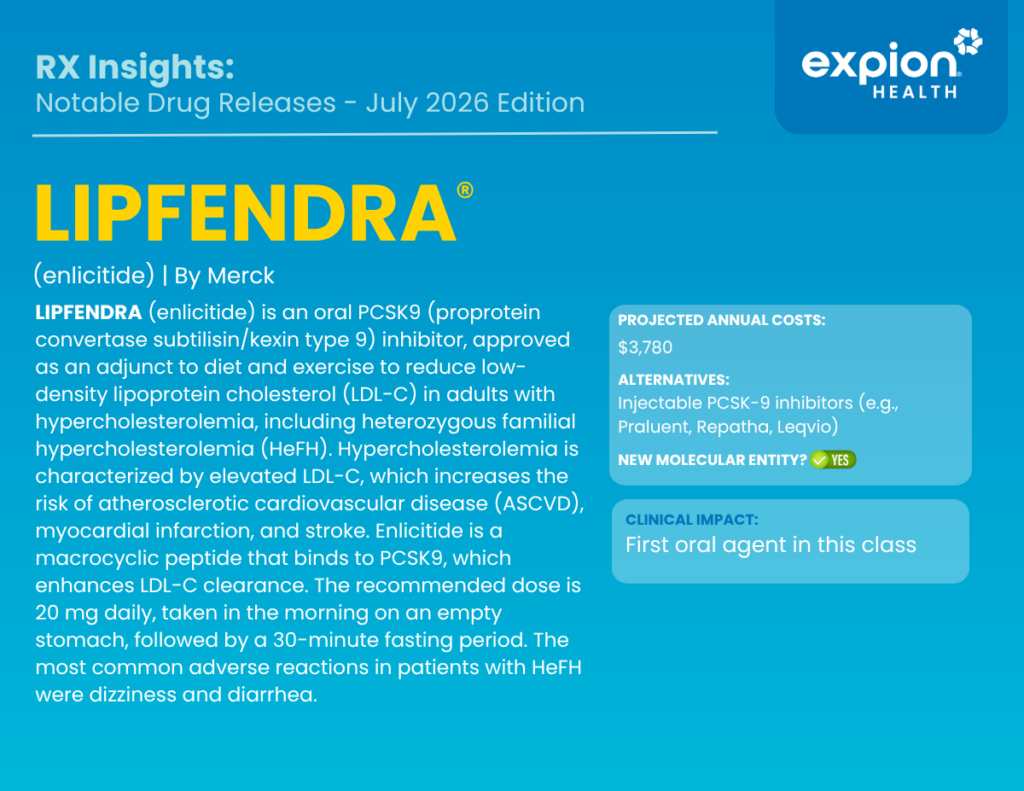
LIPFENDRA is indicated as an adjunct to diet and exercise to reduce low-density lipoprotein cholesterol (LDL-C) in adults with hypercholesterolemia, including heterozygous familial hypercholesterolemia (HeFH).
Dosage and Administration
The recommended dose of LIPFENDRA is 20 mg orally once daily. It should be taken in the morning on an empty stomach with water, black coffee, or plain tea. Patients should wait at least 30 minutes before consuming any food or other beverages. Tablets should be swallowed whole and should not be split, crushed, or chewed.
Warnings and Precautions
LIPFENDRA has a favorable safety profile, with no Boxed Warnings and no specific FDA Warnings and Precautions identified in the prescribing information. The most common adverse reactions reported in patients with heterozygous familial hypercholesterolemia (HeFH) were dizziness (9%) and diarrhea (7%). It is unknown whether LIPFENDRA may cause fetal harm; therefore, safety during pregnancy and breastfeeding has not been established.
Mechanism of Action
Enlicitide is a macrocyclic peptide that binds to Proprotein Convertase Subtilisin/Kexin type 9 (PCSK9). PCSK9 binds to the low-density lipoprotein receptors (LDLR) on the surface of hepatocytes to promote LDLR degradation within the liver. By inhibiting the binding of PCSK9 to LDLR, enlicitide increases the number of LDLRs available to clear LDL-C, thereby lowering LDL-C levels.
Disease Background
Hypercholesterolemia is a condition characterized by elevated low-density lipoprotein cholesterol (LDL-C), which contributes to atherosclerotic plaque formation and increases the risk of atherosclerotic cardiovascular disease (ASCVD), myocardial infarction, and stroke. LDL-C lowering through lifestyle modification and pharmacologic therapy is a cornerstone of cardiovascular risk reduction, particularly in patients who require additional LDL-C lowering beyond statin therapy.
Clinical Data
The clinical efficacy of LIPFENDRA was established in two randomized, double-blind, placebo-controlled Phase 3 trials: CORALreef Lipids and CORALreef HeFH. CORALreef Lipids (NCT05952856) enrolled adults with hypercholesterolemia receiving maximally tolerated lipid-lowering therapy, while CORALreef HeFH (NCT05952869) enrolled adults with heterozygous familial hypercholesterolemia (HeFH). In both studies, enlicitide 20 mg once daily produced significant reductions in LDL-C compared with placebo, with placebo-adjusted reductions of approximately 57% at Week 24. LDL-C lowering was observed as early as Week 8 and was maintained throughout treatment. The safety profile was generally comparable to placebo, with low rates of treatment discontinuation due to adverse events.
Indication
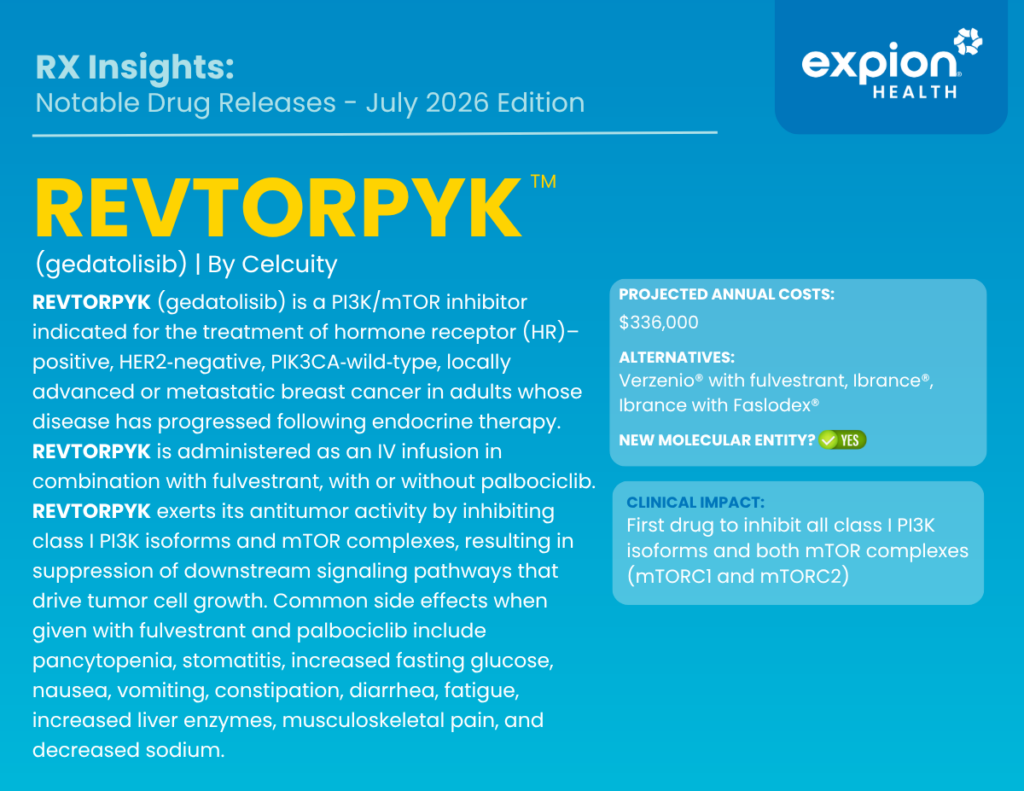
REVTORPYK is indicated to treat hormone receptor (HR)-positive, human epidermal growth factor receptor 2 (HER2)-negative locally advanced or metastatic breast cancer, specifically for those without a PIK3CA mutation who have progressed after at least one prior endocrine therapy. It is used in combination with fulvestrant, with or without palbociclib.
Dosage and Administration
The recommended dosage for REVTORPYK is 180 mg intravenously as a 30-minute infusion once weekly on Days 1, 8, and 15 of a 28-day cycle in combination with fulvestrant, with or without palbociclib, until disease progression or unacceptable toxicity. Steroid-containing alcohol-free mouthwash should be initiated prophylactically to reduce the incidence and severity of stomatitis. Continue to administer steroid-containing alcohol-free mouthwash 4 times daily for the first 8 weeks of treatment and longer if needed.
Warnings and Precautions
Warnings include stomatitis, dermatologic adverse reactions (severe rash and infectious sequelae), hyperglycemia, and embryo-fetal toxicity. Common side effects when used with fulvestrant and palbociclib include decreased white blood cell counts, decreased red blood cell counts, decreased platelet counts, stomatitis, increased fasting glucose, nausea, vomiting, constipation, diarrhea, fatigue, increased alanine aminotransferase (ALT), increased aspartate aminotransferase (AST), musculoskeletal pain, and decreased sodium.
Mechanism of Action
REVTORPYK (gedatolisib) inhibits class I phosphoinositide 3-kinase (PI3K) isoforms and both mTORC1/2, blocking multiple effectors downstream, including AKT (also called Protein Kinase B, or PKB). In estrogen receptor (ER) positive breast cancer cell lines and xenograft models harboring wild-type or mutant PIK3CA, gedatolisib induced apoptosis and anti-proliferative effects in vitro and reduced tumor cell growth in vivo.
Disease Background
Hormone receptor (HR)–positive, human epidermal growth factor receptor 2 (HER2)–negative breast cancer is the most common subtype of breast cancer, accounting for roughly 70% of all cases. These tumors rely on estrogen or progesterone signaling for growth, making endocrine therapy the foundation of treatment. Despite initial responsiveness, many patients eventually develop endocrine resistance, leading to disease progression. Among patients with metastatic HRpositive, HER2negative disease, PIK3CA mutations occur in approximately 40%, driving activation of the PI3K/AKT/mTOR pathway and contributing to therapeutic resistance. Patients with PIK3CAwildtype tumors still experience significant progression due to alternative mechanisms of pathway activation and resistance to prior endocrine therapy. Standard treatment typically includes endocrine therapy combined with CDK4/6 inhibitors; however, many patients ultimately progress, highlighting the need for therapies that target additional signaling pathways involved in tumor growth and survival.
Clinical Data
REVTORPYK received FDA approval based on the Phase 3 VIKTORIA1 trial (NCT05501886) in adults with HRpositive, HER2negative, PIK3CAwildtype, locally advanced or metastatic breast cancer. The study met its primary endpoint, demonstrating a statistically significant improvement in progressionfree survival (PFS) for gedatolisib-triplet (combination of gedatolisib, fulvestrant, and palbociclib) or gedatolisib-doublet (gedatolisib and fulvestrant) compared with fulvestrant alone. The median progression-free survival (PFS) was 9.3 months in the gedatolisib-triplet group, 2.0 months in the fulvestrant group (hazard ratio [HR] for progression or death, 0.24 [95% CI, 0.17 to 0.35]; p < 0.001), and 7.4 months in the gedatolisib-doublet group (HR, 0.33 [95% CI, 0.24 to 0.48]; p < 0.001 v fulvestrant).
Indication
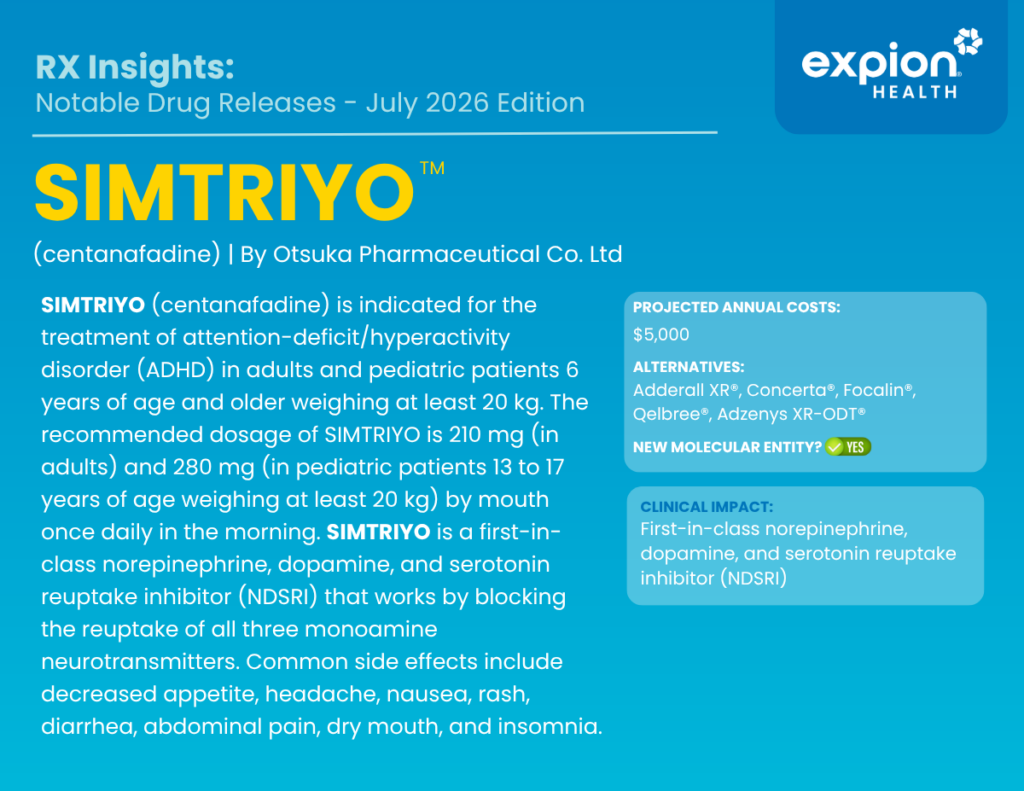
SIMTRIYO is indicated for the treatment of attention-deficit/hyperactivity disorder
(ADHD) in adults and pediatric patients 6 years of age and older weighing at least 20 kg.
Dosage and Administration
The recommended dosage of SIMTRIYO is 210 mg (in adults) and 280 mg (in pediatric patients 13 to 17 years of age weighing at least 20 kg) by mouth once daily in the morning with or without food. The dose may be increased to maximum of 280 mg in adults. The recommended dosage in pediatric patients 6 to 12 years of age weighing at least 20 kg is based on weight. Capsules may be swallowed whole or opened and entire contents sprinkled on applesauce or yogurt, or in orange juice.
Warnings and Precautions
Common side effects include decreased appetite, headache, nausea, rash, diarrhea, abdominal pain, dry mouth, and insomnia. Serious side effects include risks to patients with serious cardiac disease, increased blood pressure and heart rate, psychiatric adverse reactions, hypersensitivity reactions, long-term suppression of growth in pediatric patients, peripheral vasculopathy including Raynaud’s phenomenon, serotonin syndrome, and emergence or worsening of tics or Tourette’s syndrome.
Mechanism of Action
SIMTRIYO contains centanafadine, a first-in-class norepinephrine, dopamine, and serotonin reuptake inhibitor (NDSRI) that works by blocking the reuptake of all three monoamine neurotransmitters: norepinephrine (involved in attention, alertness, and executive function), dopamine (critical for motivation, reward processing, and focus), and serotonin (regulates mood, impulse control, and emotional regulation).
Disease Background
ADHD is a common neurodevelopmental disorder affecting ~11% of U.S. children and ~4.4% of adults, according to the CDC and National Comorbidity Survey. It is defined by persistent inattention, hyperactivity, and impulsivity, driven largely by dysregulated norepinephrine and dopamine signaling in brain regions responsible for attention and executive function. Symptoms often persist into adulthood and can impair academic, occupational, and daily functioning. A meaningful subset of patients experiences inadequate response or tolerability issues with stimulant medications, creating a need for effective nonstimulant options. SIMTRIYO (centanafadine) is a triple reuptake inhibitor that modulates norepinephrine, dopamine, and serotonin, offering a differentiated mechanism for patients who require broader neurotransmitter modulation.
Clinical Data
The efficacy of SIMTRIYO for the treatment of ADHD was established in four shortterm, randomized, doubleblind, placebocontrolled studies in pediatric patients 6 to 17 years of age (study 1 [NCT05428033] and study 2 [NCT05257265]) and adults 18 to 55 years of age (study 3 [NCT03605680] and study 4 [NCT03605836]). In pediatric patients, only the weightbased dose equivalent to 280 mg once daily demonstrated a statistically significant improvement in ADHD symptoms as measured by the ADHD Rating Scale5 (ADHDRS5) at Week 6 (Day 42); the 140 mg equivalent dose did not show a significant difference and is not approved. In Study 1 (ages 6–12), patients receiving the 280 mg equivalent dose showed significantly greater reductions in ADHDRS5 total scores compared with placebo. In Study 2 (ages 13–17), SIMTRIYO 280 mg once daily similarly produced statistically significant reductions in ADHDRS5 scores versus placebo, while 140 mg did not. Adult efficacy is supported by Studies 3 and 4 using another centanafadine formulation, in which both low and highdose regimens produced statistically significant reductions in Adult ADHD Investigator Symptom Rating Scale (AISRS) total scores and Clinical Global Impressions – Severity (CGIS) scores at Day 42 compared with placebo. These results support the effectiveness of SIMTRIYO 210 mg and 280 mg once daily in adults, with no expected differences in efficacy relative to the doses studied in the centanafadine comparator formulation.
Indication
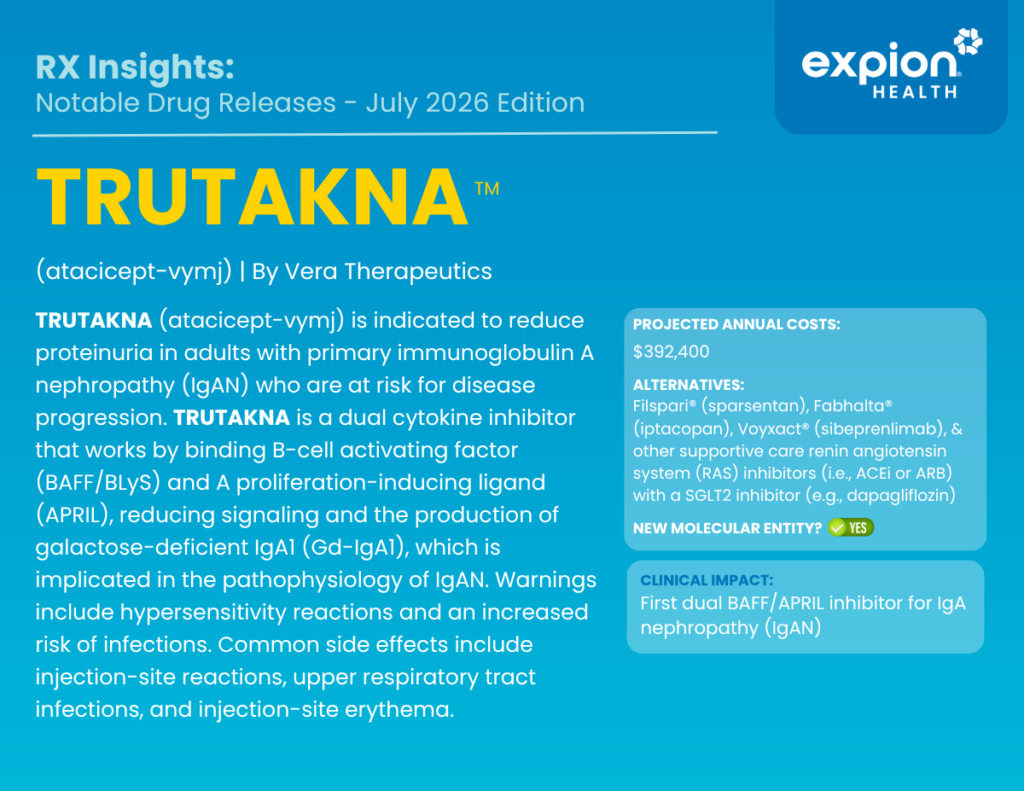
TRUTAKNA is indicated to reduce proteinuria in adults with primary immunoglobulin A nephropathy (IgAN) who are at risk for disease progression.
Dosage and Administration
The recommended dose of TRUTAKNA is 150 mg injected subcutaneously once a week. The TRUTAKNA autoinjector allows patients self-administer, either into the abdomen at least 2 inches away from the belly button or the front of the thigh. Patients should rotate the injection site for each dose.
Warnings and Precautions
Warnings include hypersensitivity reactions and increased risk of infections.
Common side effects include injection site reactions, upper respiratory tract infections (common cold type), and injection site redness (erythema).
Mechanism of Action
Atacicept-vymj is a dual cytokine inhibitor that binds B cell activating factor (BAFF, also known as BLyS) and A proliferation-inducing ligand (APRIL), thereby reducing BAFF- and APRIL-mediated signaling. This activity results in decreased production of serum galactose-deficient IgA1 (Gd-IgA1), which is implicated in the pathophysiology of IgAN.
Disease Background
IgA nephropathy (IgAN) is an autoimmune kidney disorder characterized by the buildup of immunoglobulin A (IgA) in the glomeruli. This accumulation damages the glomeruli and reduces the kidneys’ ability to properly filter the blood, allowing blood and protein to pass into the urine. Common clinical signs and symptoms include red colored urine due to hematuria, flank pain, ankle swelling, and elevated blood pressure. IgAN may progressively worsen over time, with up to 40% of patients developing end-stage renal disease (ESRD) after 10 or more years of living with the condition. These patients may ultimately require dialysis or a kidney transplant. As a result, the primary treatment goal is to slow or prevent progression to ESRD.
Although the exact cause of IgAN has not been identified, the disease is associated with the production of abnormal IgA proteins that the body recognizes as foreign. The immune system attacks these abnormal proteins, leading to the formation of IgA clusters. These clusters eventually deposit in the kidneys, where they cause inflammation and kidney damage. During an active infection, particularly a respiratory infection, increased circulation of these IgA clusters may result in greater deposition within the kidneys. Because IgAN may have few noticeable symptoms or symptoms that can be mistaken for other conditions, many patients are diagnosed following a respiratory tract illness. A kidney biopsy is required to definitively diagnose IgAN and is generally performed in patients with persistent proteinuria, defined as a urine protein-to-creatinine ratio (UPCR) greater than 0.5.
IgAN is the most common primary glomerular disease worldwide, with an estimated incidence of 2 to 10 cases per 100,000 people. Although the disease can occur at any age, it is most frequently diagnosed in individuals in their 20s and 30s. The exact prevalence of IgAN in the United States remains unclear but is estimated to affect approximately 130,000 to 150,000 patients. Of these patients, about 30% to 40% are believed to have a more progressive form of the disease.
Clinical Data
The efficacy of TRUTAKNA was evaluated in Origin 3 (NCT04716231), a randomized, double-blind, placebo-controlled study in adults with biopsy-confirmed IgA nephropathy (IgAN). Eligible patients had an eGFR ≥30 mL/min/1.73 m² and proteinuria and were receiving a stable, maximally tolerated dose of renin-angiotensin system (RAS) inhibitor therapy, with or without an SGLT2 inhibitor and/or mineralocorticoid receptor antagonist.
Patients were randomized 1:1 to receive atacicept-vymj 150 mg or placebo once weekly by subcutaneous injection. The efficacy analysis included the first 203 patients who reached Week 36. The primary efficacy endpoint was the percent reduction in urine protein-to-creatinine ratio (UPCR) from baseline at Week 36.
At Week 36, atacicept-vymj reduced UPCR by 46% from baseline compared with 7% with placebo. The reduction in UPCR with atacicept-vymj versus placebo was 42% (95% CI: 29%–52%; p<0.0001). The treatment effect was generally consistent across age, sex, race, and baseline disease characteristics and was similar regardless of concomitant SGLT2 inhibitor use.