
This month’s edition provides a focused review of newly approved and recently launched therapies. Expion Health monitors these developments closely to assess clinical relevance, therapeutic positioning, and potential implications for payers, providers, and patients.
KYGEVVI
Indication
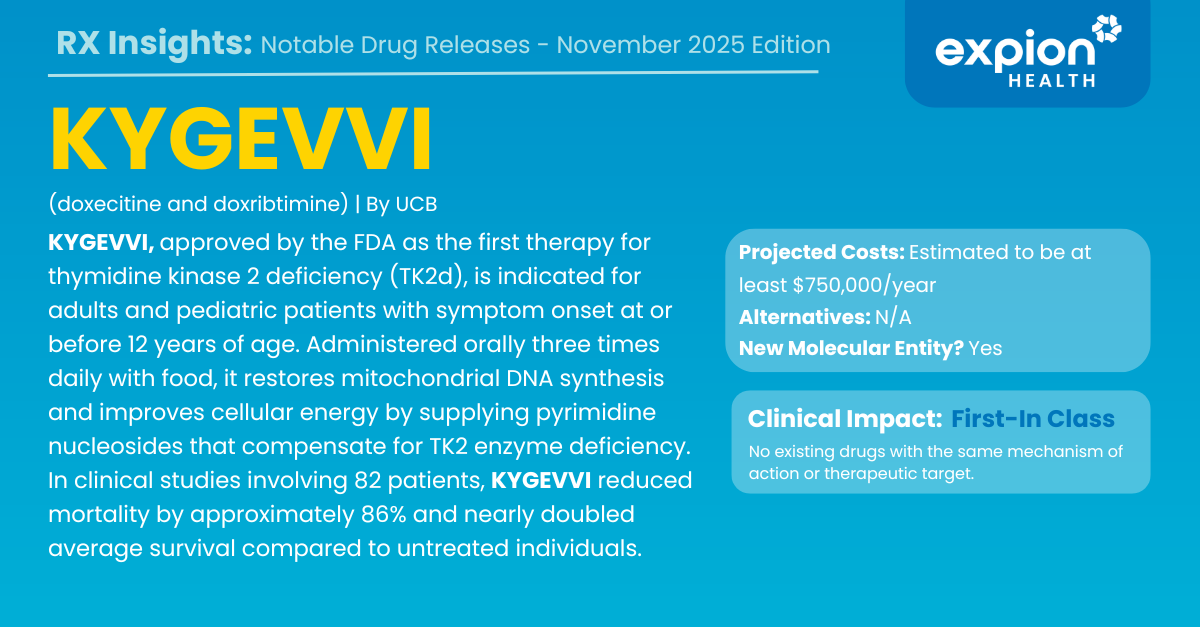
KYGEVVI is approved by the FDA for the treatment of thymidine kinase 2 deficiency (TK2d) in adults and pediatric patients with symptom onset at or before 12 years of age. It is the first and only approved therapy for this ultra-rare mitochondrial disorder.
Dosage and Administration
KYGEVVI is administered orally in three equally divided doses with food, approximately six hours apart (±2 hours). It is supplied as a powder formulation containing 2 g of doxecitine and 2 g of doxribtimine. The recommended dosing regimen begins at 260 mg/kg/day, with an intermediate dose of 520 mg/kg/day and a maintenance dose of 800 mg/kg/day.
Warnings and Precautions
Elevations in liver transaminases (ALT and AST) have been reported. Baseline liver function and total bilirubin levels should be assessed prior to treatment initiation. Dose reduction or therapy interruption should be considered for patients experiencing severe diarrhea or vomiting. The most common adverse reactions include diarrhea, abdominal pain, vomiting, and elevated liver enzyme levels.
Mechanism of Action
KYGEVVI restores mitochondrial DNA synthesis by incorporating pyrimidine nucleosides into skeletal muscle DNA, thereby compensating for deficient TK2 enzyme activity and improving cellular energy function.
Disease Background
Thymidine kinase 2 deficiency (TK2d) is an ultra-rare, genetic mitochondrial disorder that impairs mitochondrial DNA maintenance, leading to progressive muscle weakness and respiratory failure. Fewer than 100 cases have been reported worldwide, and the disease often results in severe neuromuscular dysfunction in early life.
Clinical Data
FDA approval was based on data from one open-label Phase 2 study, two retrospective chart-review studies, and an expanded access program involving 82 patients with genetically confirmed TK2d and symptom onset at or before 12 years of age. KYGEVVI treatment demonstrated an approximately 86% reduction in mortality compared with untreated individuals (3 deaths in the treated group vs. 28 in controls). Average survival at 10 years from study initiation was 9.6 years for KYGEVVI-treated patients versus 5.7 years in the control group, supporting its significant impact on survival and disease progression.
POHERDY
Indication
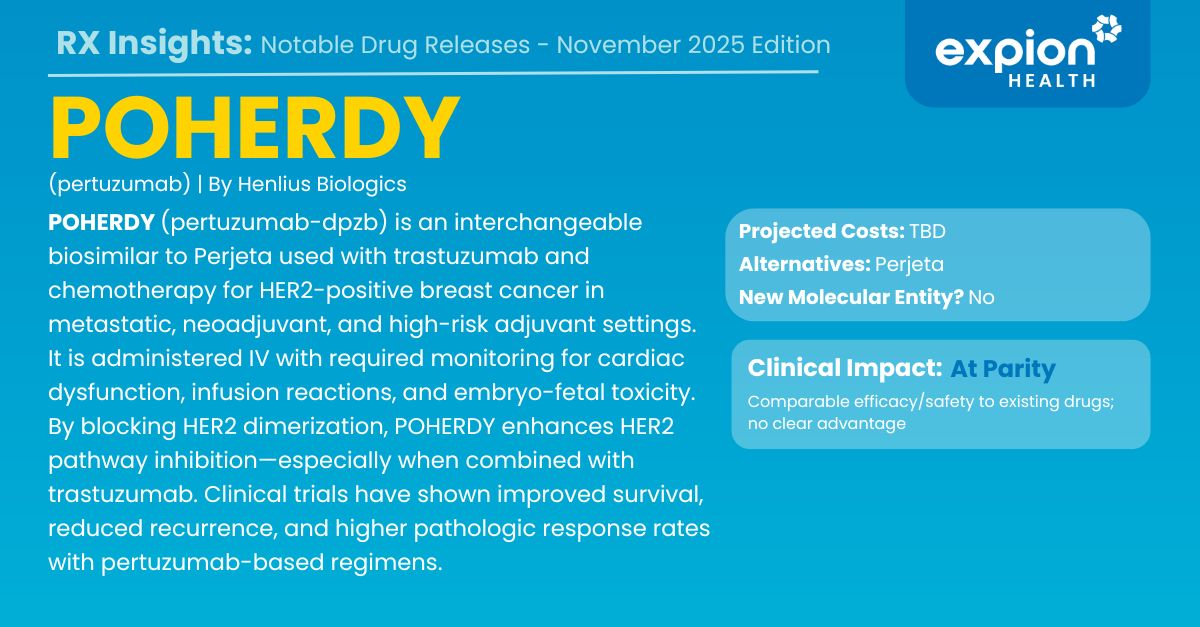
POHERDY (pertuzumab-dpzb) is an FDA-approved interchangeable biosimilar to Perjeta for the treatment of HER2-positive breast cancer. It is indicated for use in combination with trastuzumab and docetaxel for first-line HER2-positive metastatic disease; as neoadjuvant therapy with trastuzumab and chemotherapy for locally advanced, inflammatory, or early-stage tumors >2 cm or node-positive; and as adjuvant therapy for early breast cancer at high risk for recurrence.
Dosage and Administration
POHERDY is administered by intravenous infusion with a loading dose of 840 mg, followed by 420 mg every three weeks. The initial infusion is given over approximately 60 minutes, with subsequent doses administered over 30–60 minutes. Patients should be monitored for infusion-related reactions. POHERDY is supplied as a single-dose vial, must be diluted in normal saline, and stored according to recommended conditions prior to administration.
Warnings and Precautions
Key safety concerns include left ventricular dysfunction, embryo-fetal toxicity, infusion-related reactions, and hypersensitivity. Baseline and periodic left ventricular ejection fraction (LVEF) assessments are required. Pregnancy must be avoided during treatment. Infusion-related or hypersensitivity reactions may require slowing, interrupting, or discontinuing therapy depending on severity.
Mechanism of Action
Pertuzumab is a monoclonal antibody that binds to the HER2 receptor at the dimerization domain, preventing HER2 from forming active signaling dimers—particularly HER2:HER3. This inhibition disrupts downstream proliferative signaling pathways. When used with trastuzumab, which binds a different HER2 epitope, the combination achieves more complete blockade of HER2-driven tumor growth.
Disease Background
HER2-positive breast cancer is defined by HER2 protein overexpression or gene amplification and historically carried a poor prognosis due to aggressive tumor biology. The development of HER2-targeted therapies, including trastuzumab and pertuzumab, has significantly improved outcomes in both early-stage and metastatic settings by inhibiting key signaling pathways responsible for tumor progression.
Clinical Data
Evidence supporting the efficacy of pertuzumab includes the CLEOPATRA Phase 3 trial, which demonstrated significant improvements in progression-free and overall survival when pertuzumab was added to trastuzumab and docetaxel in first-line metastatic breast cancer. In early-stage disease, the APHINITY trial showed invasive disease-free survival benefit in high-risk patients receiving pertuzumab-containing adjuvant therapy. Neoadjuvant trials such as NeoSphere and TRYPHAENA demonstrated higher pathologic complete response rates with regimens incorporating pertuzumab.
KOMZIFTI
Indication
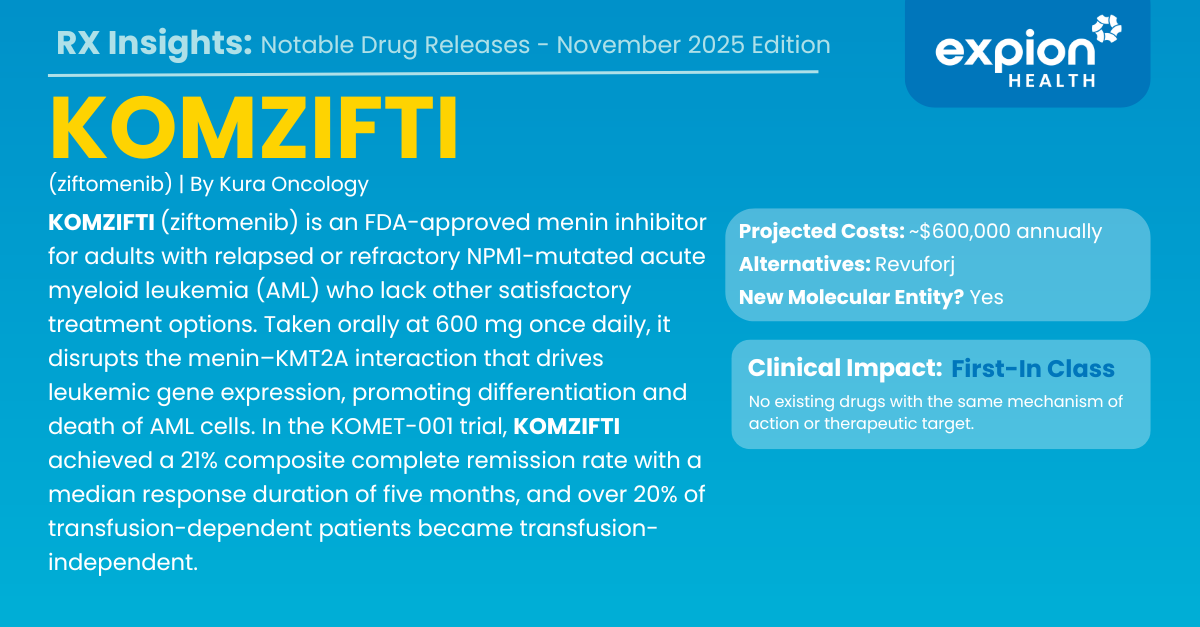
KOMZIFTI (ziftomenib) is approved by the FDA for the treatment of adult patients with relapsed or refractory acute myeloid leukemia (AML) harboring a susceptible Nucleophosmin-1 (NPM1) mutation and who have no satisfactory alternative treatment options.
Dosage and Administration
The recommended dose is 600 mg orally once daily (three 200 mg capsules), taken continuously until disease progression or unacceptable toxicity.
Warnings and Precautions
Key safety considerations include the risk of differentiation syndrome, QT interval prolongation, and embryo-fetal toxicity. Electrolyte abnormalities should be corrected prior to treatment, and patients require ECG and electrolyte monitoring before and during therapy.
Mechanism of Action
KOMZIFTI is a menin inhibitor that blocks the interaction between menin and lysine-specific methyltransferase, a protein complex that drives abnormal gene expression in NPM1-mutated AML. Disrupting this interaction reduces leukemogenic transcription programs necessary for AML cell survival and self-renewal, leading to differentiation and apoptosis of malignant blasts.
Disease Background
Acute myeloid leukemia is an aggressive hematologic malignancy of the myeloid lineage. NPM1 mutations occur in approximately 30% of adult AML cases and are associated with high relapse rates and poor outcomes, particularly in the relapsed/refractory setting. AML primarily affects older adults, with a median age at diagnosis of 69 years. Despite high initial remission rates with induction chemotherapy, many patients relapse, underscoring the need for targeted therapies for NPM1-mutated disease.
Clinical Data
FDA approval was based on the KOMET-001 open-label, single-arm, multicenter trial in 112 adults with relapsed or refractory NPM1-mutated AML. The composite complete remission (CR + CRh) rate was 21.4%, with a median remission duration of five months. Additionally, 21.2% of patients who were transfusion-dependent at baseline achieved transfusion independence during therapy. Responses typically occurred within the first few treatment cycles and were observed across patients with diverse prior therapies, supporting KOMZIFTI as an important targeted option for this genetically defined subset of AML.
REDEMPLO
Indication
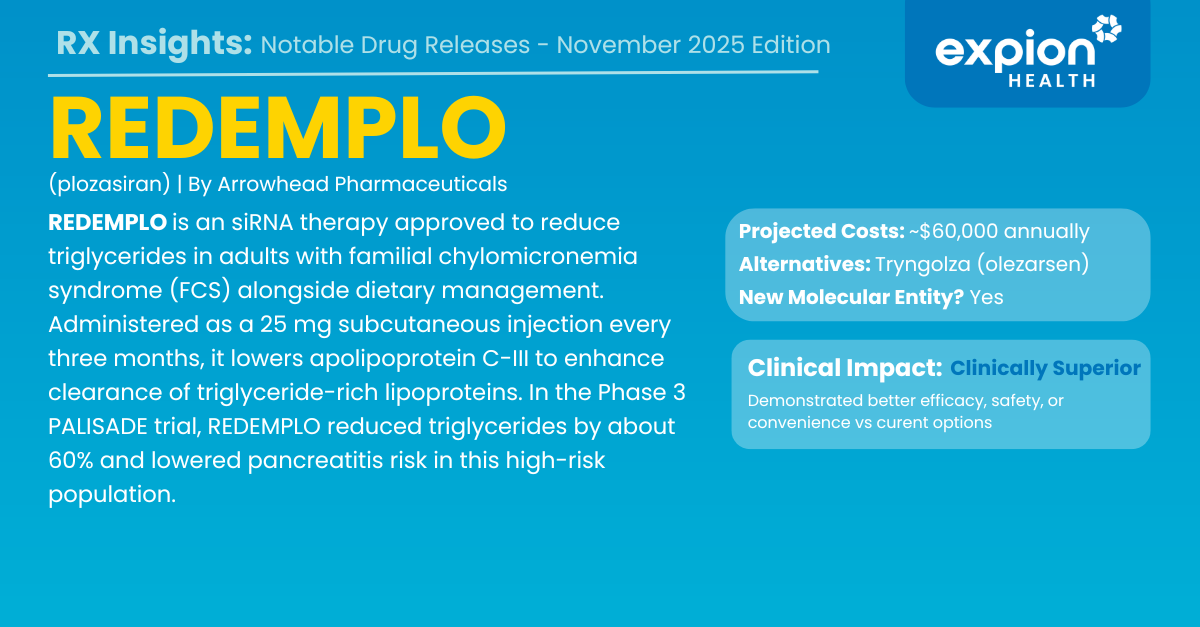
REDEMPLO is an apolipoprotein C-III–directed small interfering RNA (siRNA) therapy approved for the reduction of triglycerides in adults with familial chylomicronemia syndrome (FCS), alongside dietary management.
Dosage and Administration
REDEMPLO is administered as a 25 mg subcutaneous injection once every 3 months.
Warnings and Precautions
Common adverse reactions include injection-site reactions, headache, nausea, and increased blood glucose. Patients should be monitored for glycemic changes. Proper injection technique and site rotation are recommended to minimize local reactions.
Mechanism of Action
REDEMPLO uses RNA interference to reduce hepatic production of apolipoprotein C-III, a protein that slows clearance of triglyceride-rich lipoproteins. Lowering apoC-III enhances lipolysis and increases clearance of chylomicrons, directly addressing the underlying metabolic defect in FCS and significantly lowering circulating triglyceride levels.
Disease Background
Familial chylomicronemia syndrome is a rare genetic disorder marked by impaired chylomicron clearance and extremely elevated triglycerides, typically ≥880 mg/dL. It affects an estimated 1–10 per million people in the U.S. Patients face a high risk of recurrent, potentially life-threatening acute pancreatitis, alongside chronic symptoms such as abdominal pain and fatigue. While strict dietary fat restriction is foundational, many patients require pharmacologic therapy due to persistent disease burden.
Clinical Data
FDA approval was based on the Phase 3 PALISADE trial, a randomized, placebo-controlled study in adults with FCS on a very low-fat diet. REDEMPLO produced sustained, clinically meaningful triglyceride reductions, with median decreases of approximately 60% or more depending on the time point. Patients also experienced fewer pancreatitis episodes, reinforcing the therapeutic significance of triglyceride lowering in this high-risk population.
HYRNUO
Indication
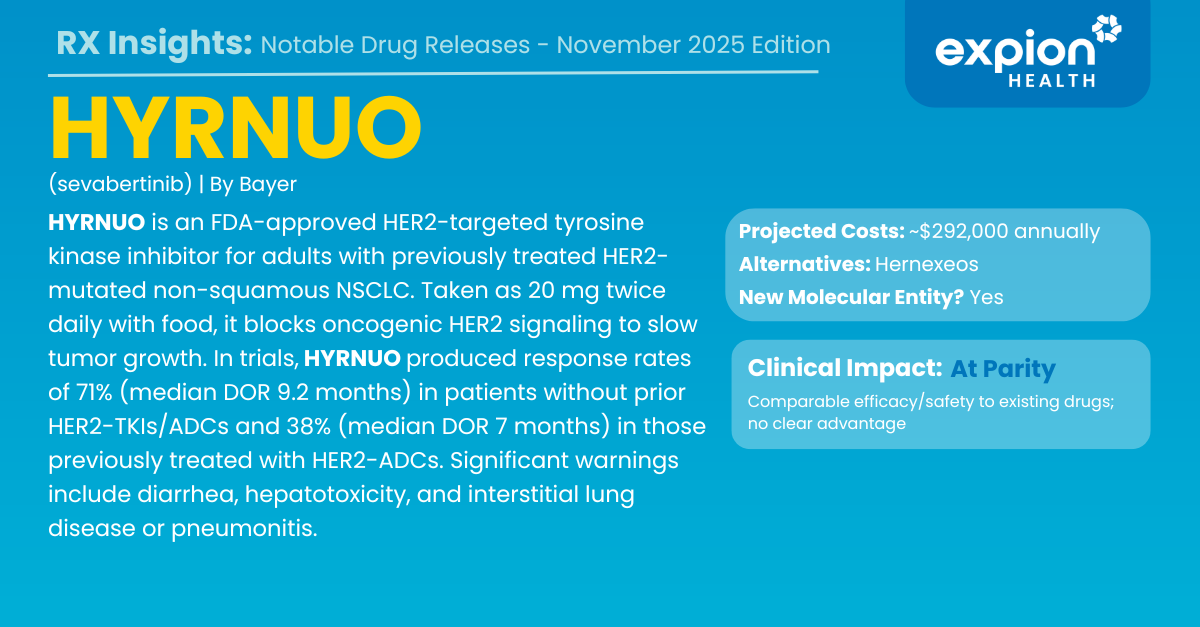
HYRNUO received accelerated FDA approval for adults with locally advanced or metastatic non-squamous non–small cell lung cancer (NSCLC) whose tumors harbor HER2 tyrosine kinase domain activating mutations and who have received at least one prior systemic therapy. It provides a targeted treatment option for a molecular subtype that previously lacked effective therapies.
Dosage and Administration
The recommended dose is 20 mg orally twice daily with food, continued until disease progression or unacceptable toxicity. Patients should be advised to take doses consistently with meals to ensure adequate absorption and maintain adherence.
Warnings and Precautions
HYRNUO may cause severe diarrhea, hepatotoxicity, and interstitial lung disease (ILD)/pneumonitis. Early antidiarrheal treatment is recommended at first symptoms. Liver function tests should be monitored regularly; dose interruptions or discontinuation may be required based on clinical or laboratory findings. Any suspicion of ILD requires immediate evaluation and drug discontinuation if confirmed.
Mechanism of Action
HYRNUO is a selective HER2 tyrosine kinase inhibitor that targets HER2 mutations—including exon 20 insertions and other activating alterations—within the kinase domain. By blocking HER2-driven signaling pathways, the drug reduces tumor cell proliferation and survival, offering precision targeting of tumors dependent on oncogenic HER2 variants.
Disease Background
HER2 tyrosine kinase domain mutations occur in a small subset of non-squamous NSCLC and act as oncogenic drivers. Historically, HER2-mutant NSCLC showed poor response to traditional HER2 antibodies or nonspecific TKIs, leaving a significant unmet need. Dedicated HER2-mutant therapies now provide improved, mutation-specific activity in this difficult-to-treat population.
Clinical Data
Accelerated approval was based on an open-label, multicenter, multi-cohort trial in previously treated patients with HER2-mutated NSCLC.
Among 70 patients who had received prior systemic therapy but no prior HER2-targeted TKI or ADC:
- ORR: 71%
- DOR ≥ 6 months: 54%
- Median DOR: 9.2 months
Among 52 patients previously treated with a HER2-targeted ADC:
- ORR: 38%
- DOR ≥ 6 months: 60%
- Median DOR: 7 months
VOYXACT
Indication
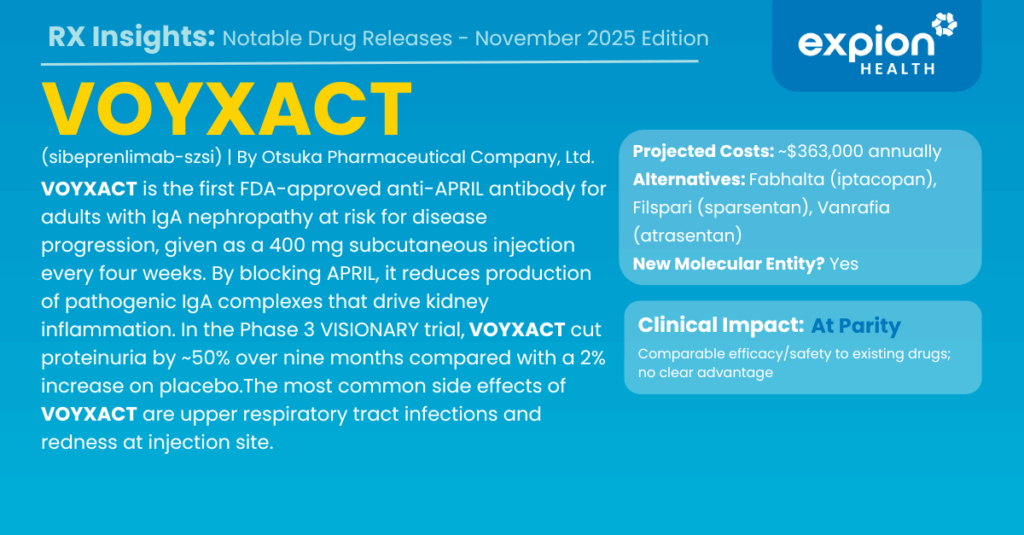
VOYXACT is FDA-approved to reduce proteinuria in adults with primary immunoglobulin A nephropathy (IgAN) who are at risk for disease progression. It is the first FDA-approved anti-APRIL (A Proliferation-Inducing Ligand) antibody for the treatment of IgAN.
Dosage and Administration
VOYXACT is administered as a 400 mg subcutaneous injection once every 4 weeks.
Warnings and Precautions
Common adverse reactions include upper respiratory tract infections and injection-site redness. Serious risks include immunosuppression and increased susceptibility to infections. Patients should be monitored for signs of infection throughout treatment.
Mechanism of Action
VOYXACT targets and blocks APRIL, a protein that promotes the production of pathogenic IgA antibodies. By inhibiting APRIL, the drug reduces the formation of harmful IgA immune complexes that contribute to kidney inflammation and damage in IgAN.
Disease Background
IgA nephropathy (IgAN) is a rare, serious kidney disease in which abnormal IgA proteins accumulate in the kidneys, damaging the glomeruli and allowing blood and protein to leak into the urine. The disease often worsens following respiratory infections, which increase circulating IgA complexes. IgAN affects an estimated 60,000–150,000 people in the United States and can lead to progressive kidney function decline.
Clinical Data
VOYXACT received accelerated approval based on the Phase 3 VISIONARY trial.
- After 9 months of treatment among the first 320 participants:
- VOYXACT reduced proteinuria by 50%
- Placebo group experienced a 2% increase
The ongoing trial will evaluate whether VOYXACT slows long-term kidney function decline using 24-month eGFR outcomes.
ITVISMA

Indication
ITVISMA is an FDA-approved gene-replacement therapy for the treatment of spinal muscular atrophy (SMA) in adults and children aged 2 years and older with a confirmed mutation or deletion in the SMN1 gene.
Dosage and Administration
ITVISMA is administered as a single-dose intrathecal injection given over 1–2 minutes via lumbar puncture. Liver function must be assessed prior to treatment. Patients receive corticosteroids before and after administration to reduce inflammation and support liver safety.
Warnings and Precautions
ITVISMA carries a boxed warning for serious liver injury. Patients with pre-existing liver impairment or acute hepatic viral infection may be at higher risk. Common adverse reactions include upper respiratory tract infection, gastrointestinal symptoms, fever, and headache.
Mechanism of Action
ITVISMA delivers a functional SMN1 gene to motor neuron cells, enabling production of survival motor neuron (SMN) protein, which is essential for motor neuron survival. Restoring SMN protein slows further motor neuron degeneration and disease progression.
Disease Background
Spinal muscular atrophy (SMA) is a genetic neuromuscular disorder caused by mutations or deletions in the SMN1 gene, resulting in insufficient SMN protein and progressive loss of motor neurons. This leads to muscle weakness, paralysis, and, in severe cases, early mortality. SMA affects approximately 1 in 10,000 infants and remains the leading genetic cause of infant death.
Clinical Data
FDA approval was based on the Phase 3 STEER trial, which evaluated motor function improvements using the Hammersmith Functional Motor Scale Expanded (HFMSE) over 52 weeks.
- The trial enrolled treatment-naïve children aged 2–17 years who could sit but had never walked independently.
- Patients treated with ITVISMA experienced a 1.88-point improvement in HFMSE score compared with placebo, reflecting measurable gains in motor function across the 33-item assessment.